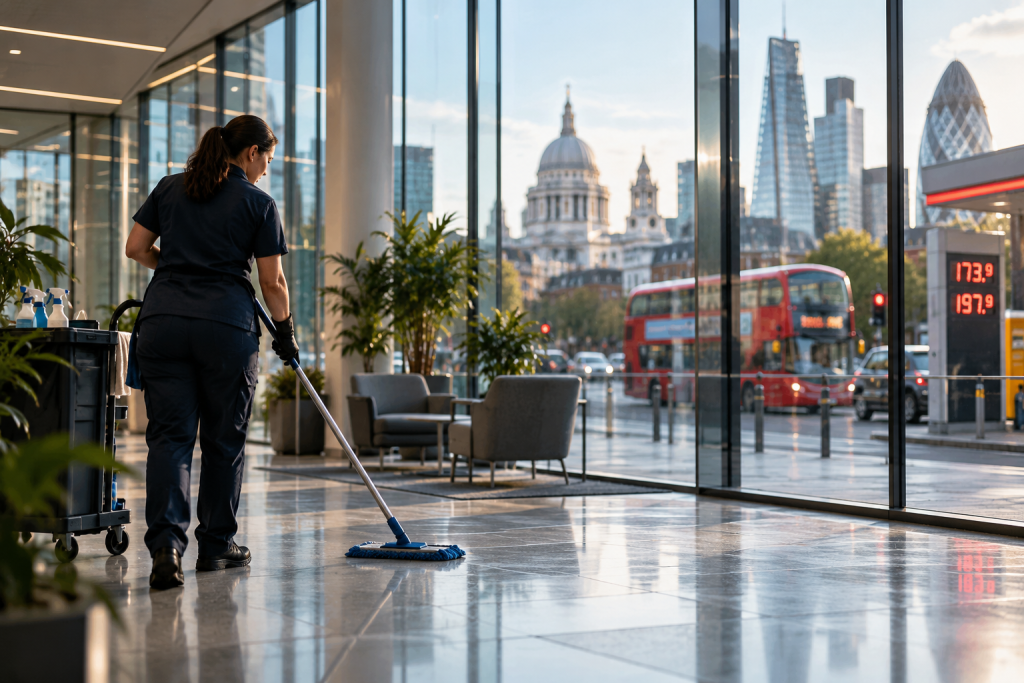
Ask ten facilities managers how often their office should be cleaned and you’ll get ten different replies. The honest answer is it is contingent upon the building, the people in it and how they use it, however there is a rational minimum and most London workplaces should start there.
One thing we know for sure, is what goes down at Dazzle when the schedule is off. Too little and it’s washrooms and kitchens become a staff complaint, while too much and you’re paying for work, pretty much noone needs. This is how to strike the right balance, and how to tell when your current arrangement isn’t working.
The Short Answer: Daily, with extras on top
Daily office cleaning London is the right basis for most workplaces. That means emptying bins, wiping desks and shared surfaces, vacuuming main routes and cleaning washrooms and kitchens. These areas are used all the time and are the first places that visitors and staff judge your standards.
Above that, there are jobs weekly and monthly. Weekly work includes dusting around screens and cables, vacuuming under desks and wiping down ledges. The deeper stuff is monthly or quarterly work – carpet extraction, hard floor scrubbing and resealing, tidying up cable trays.
A good commercial cleaning London contract builds all three layers into one schedule rather than treating them as expensive add-ons.

Why London Offices Get Dirty Faster
London has its own problems. Rain, grit and street dust is carried in on every pair of shoes and ground into carpets and scratched into hard floors. The worst is at doorways, lifts and reception areas. Regular vacuuming and keeping your entrance matting clean will do more for your floors than the occasional deep clean.
It’s far more expensive to clean a dirty carpet or refinish a hardwood floor than it is to simply keep it clean. One of the cheapest ways to protect what you have already paid for is to have regular cleaning, and it keeps your reception looking the part when clients walk in off a wet pavement.
Tech-heavy offices have another problem, which is seen in a form of a monitors, keyboards and cabling under desks that collect dust which is usually not noticed until it is really, really thick. So it’s important to dust at least once a week, even if everyone thinks the office looks okay.
And then there’s cold season. From autumn on, colds and flu are mainly caught in shared spaces. Taps, flush handles, door plates, microwave handles and meeting room controls need disinfecting every day, not just when someone remembers. Less sick days = better productivity. That pays for itself.
Hybrid Working Changed the Schedule
A fixed Monday to Friday rota made sense a few years back. Now many offices in the City, Canary Wharf, Shoreditch and the West End are jammed Tuesday to Thursday and quiet on Monday and Friday. Clean every area to the same standard every day is a waste of budget.
Flex the service. It’s the smarter way. Schedule more hours on peak days, lighter on quiet days, consider a daytime porter for washrooms, kitchens, reception. A porter will fix a problem when it occurs and not leave it for the evening shift. The best cleaning companies London businesses trust will suggest this kind of tailored schedule rather than selling a one-size-fits-all package.
The exception to every rule is washrooms and kitchens. However many there are, they need attention every working day and in busy offices more than once. Nothing kills staff morale quite like running out of soap or paper towels, and this is true for almost any cleaning failure. So, consumables need to be part of the same visit, not an afterthought.
Hot desking is worth a mention too. When twenty people share ten desks, the surfaces need a lot more sanitizing than an office where everyone has their own desk. Desks that can attend more people, tend to get messier as everyone assumes they’ll only be using the space for a few hours. Yet, coffee rings, crumbs, sticky keyboard keys and abandoned Post-it notes somehow always become someone else’s problem.
After all, nobody feels quite as responsible for a desk they don’t actually own!
A Simple Frequency Guide
- Daily: bins, desks and touchpoints, washrooms, kitchens, reception and main floor areas.
- Weekly: dusting monitors and cables, under-desk vacuuming, partitions and ledges.
- Monthly: deep washroom and kitchen cleaning, descaling, cable tray tidying.
- Quarterly: carpet extraction, upholstery cleaning, hard floor restoration and a review of the specification.
Treat this as a starting point. A small studio of eight people might get by with three visits a week. A law or finance firm hosting clients every day will want daily service and a polished reception at all times.
Signs your cleaning schedule isn’t working
Sometimes the office tells you before the invoice does. Watch for these:
- Staff complaining about washrooms or the kitchen
- Dust visible on screens, ledges or vents
- Bins overflowing before the evening clean
- A musty smell near entrances or carpets
- Sickness absence creeping up in winter
One or two of these is a nudge to adjust. Several at once usually means the schedule, or the provider, needs a rethink.
What to Ask Cleaning Companies London Offices Rely on
It is the truth that frequency matters, but so does matter who turns up to take care of your office. So, when comparing a two or a couple of commercial cleaning providers in London, make sure you ask about:
- Staff vetting: are operatives background-checked, do thay have Valid Work Permit and a DBS? Do their cleaners receive proper induction and ongoing training in cleaning procedures? Are their cleaners trained in health and safety procedures, manual handling, lone working and accident reporting?
- Fair pay: do they pay the National or London Living Wage? It tends to mean lower turnover and steadier standards.
- Health and safety: look for recognised accreditation. Dazzle is SafeContractor accredited, which many London procurement teams ask for.
- Reporting: inspections, audit trails and a single point of contact.
- Trial terms: can you test the service before signing a long contract?
A provider who answers these confidently and in writing is usually one you can rely on. If the answers are vague, then maybe you should reconsider your options.
Getting the schedule right
There is no universal size, but there is a good process. Start with daily cleaning of high-touch and high-traffic areas. Add in detail work weekly, and plan for quarterly deep cleans. Then review it every few months as attendance changes because what worked last spring may not be suitable for this winter.
Doesn’t suit your current schedule? Glad to take a look. Dazzle has flexible office cleaning London teams can scale as they grow, from a few visits a week to full daily service with daytime cover. Contact us today for a free site survey and quote.