
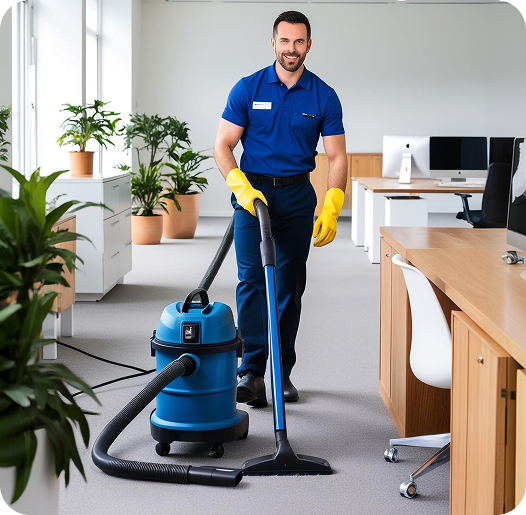






Facilities managers put off switching commercial cleaning company far longer than they should. Usually it’s not because the current provider is doing a great job — often it’s the opposite. Nobody wants to be the person who signed off on a switch that went wrong. Picture a missed clean in week one, a confused reception team, or a cleaner who can’t find the supply cupboard. These small things become visible fast, and they undermine confidence before a new contract gets a fair chance.

Here’s the good news: a properly run mobilisation is one of the most predictable processes in facilities management. It doesn’t need to be a mystery. This guide sets out what should happen in the first 30 days with a new commercial cleaning company. It also covers what to ask if a provider can’t answer clearly.
Before Day One: The Site Audit and Specification
A rushed start predicts a rocky mobilisation more reliably than almost anything else. Before any cleaner sets foot in the building, a serious provider carries out a full site audit. They walk every floor and note access points and high-traffic zones. They flag sensitive areas like server rooms and meeting suites, and record building-specific quirks such as out-of-hours security procedures or lift restrictions.
That audit should translate directly into a written specification. It needs to cover what gets cleaned, how often, to what standard, and by whom. Skip this step, and a provider risks turning up with a generic checklist instead. That’s usually where mobilisations start to unravel, because “clean” means something different to everyone until someone writes it down.
Staffing: Who’s Actually Coming, and When
UK employment law may protect the existing cleaning team when a contract changes hands. The Transfer of Undertakings (Protection of Employment) Regulations, known as TUPE, often means that team transfers to the new provider instead of the provider replacing them outright. This surprises many facilities managers, who assume a new contractor automatically means a new team. Ask your incoming provider directly whether TUPE applies to your situation. A good one flags it early rather than letting it become a week-two surprise.
When a genuinely new team does take over, expect a formal induction. The plan should include site-specific training and a walkthrough with the outgoing team or building manager. It should also include a period of on-site supervision. A supervisor or account manager needs to be physically present, not just checking in by email.
Week One: Supervised Cleans, Not Silent Ones
First cleans should never happen unsupervised. A properly mobilised contract keeps a supervisor or account manager on-site for the opening cleans. They check work against the agreed specification in real time and correct issues before they become a pattern. This is also when building-specific access issues get resolved — things like a locked storeroom, an alarm code nobody mentioned, or a lift that needs a fob.
Brief your own team too. Reception and office managers need to know what to do if a cleaner arrives outside agreed hours. The same goes for an access issue on day one. It sounds like a small detail, but it separates a minor hiccup from a complaint that damages confidence in the switch.
Weeks Two to Four: Checking In, Not Going Quiet
Many providers drop the ball right here.
Communication often falls away once the first clean goes smoothly, and that’s exactly when small issues — a missed bin, a room that’s harder to access than expected — start to compound if nobody’s asking. A well-run mobilisation includes scheduled check-ins through the first month: short calls or walkthroughs that catch problems before they become recurring complaints.
By the end of week four, you should have:
– A confirmed, signed-off specification matching what’s actually being delivered
– Direct contact with a named account manager who has visited the site in person, not just by phone
– Fully resolved access, security, or scheduling issues
– Written confirmation of the escalation process for anything that gets missed
Raise it directly with your provider if any of these are still missing a month in.
The Questions Worth Asking Before You Sign
A confident provider should be able to answer these without hesitation:
– Who conducts the site audit, and when does it happen relative to the start date?
– Does TUPE apply to our situation, and how will you handle it?
– Which member of staff is physically present for the first cleans, and for how long?
– How does the check-in schedule work for the first month?
– If something gets missed in week one, what’s the escalation route?
Vague answers to any of these signal an unstructured mobilisation process. That’s usually where disruption creeps in.

Why This Matters More Than the Clean Itself
The actual cleaning work involved in a switch isn’t complicated, to be blunt about it. Most competent providers can handle vacuuming, washrooms, and kitchens without issue. The real difference between a smooth transition and a stressful one comes down to process. It’s the audit, the staffing plan, supervision in week one, and whether anyone’s still paying attention by week three.
At Dazzle, we treat mobilisation as its own discipline rather than an afterthought bolted onto the start of a contract. A dedicated account manager and on-the-ground supervisors back every one of our office and commercial cleaning contracts in London from day one, alongside real-time attendance tracking.
Ask any prospective provider to walk you through their mobilisation plan in writing before you sign anything. If they can’t, that tells you most of what you need to know.